


Exploring the Key Technological Trends Shaping the Competitive Landscape and Future Product Development of the Mass Spectrometer Market
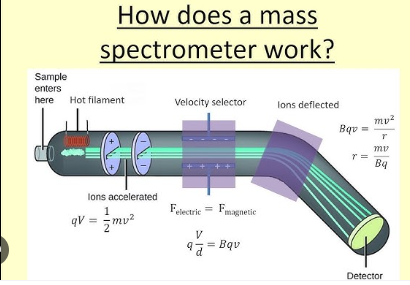
The Mass Spectrometer Market is currently defined by several transformative technological trends aimed at improving the instrument's performance and accessibility. One of the most significant is the move towards higher and ultra-high-resolution MS systems, such as Orbitrap and Fourier-Transform Ion Cyclotron Resonance (FT-ICR) MS. These instruments offer unprecedented mass accuracy and resolving power, enabling researchers to confidently identify and quantify thousands of compounds in a single, complex sample, which is vital for comprehensive metabolomics and lipidomics studies. Another key trend is the development of ambient ionization techniques, which eliminate the need for extensive sample preparation by allowing direct analysis from surfaces or in complex matrices. This not only saves significant time but also reduces the potential for analytical artifacts. Furthermore, the push for system integration is strong, with manufacturers delivering robust, single-vendor hyphenated solutions (e.g., LC-MS/MS, GC-MS) that streamline workflows and ensure greater reproducibility across different laboratory settings globally.
Automation and artificial intelligence (AI) integration constitute a critical pair of Mass Spectrometer Market trends that are rapidly gaining traction within the Mass Spectrometer Market. Automation is being applied to sample handling, data acquisition, and instrument calibration, significantly increasing laboratory throughput and minimizing human error. Concurrently, AI algorithms are being developed to process the vast and complex datasets generated by modern mass spectrometers, enabling automated peak identification, deconvolution of overlapping signals, and sophisticated biomarker discovery. This combination is making high-end MS technology more efficient and user-friendly, expanding its appeal to non-expert users in quality control and routine testing environments. As these trends mature, the cost-per-sample is expected to decrease, making MS a more economically viable option for smaller laboratories and developing countries. For a comprehensive overview of how these innovations are restructuring the industry and influencing purchasing decisions, stakeholders should consult the latest Mass Spectrometer Market trends report, which details the shift towards fully integrated and intelligent analytical platforms that promise a new era of analytical power and simplicity.
FAQ 1: What is the main advantage of ultra-high-resolution MS systems? Answer 1: The main advantage is extremely high mass accuracy and resolving power, which allows for the unambiguous identification and quantification of compounds, making it essential for distinguishing molecules with very similar masses (isomers) in complex biological samples.
FAQ 2: How does the use of ambient ionization techniques change the analytical workflow? Answer 2: Ambient ionization techniques, such as DESI, simplify the analytical workflow by allowing for the direct analysis of samples (e.g., tissue sections, contaminated surfaces) in the open atmosphere without the need for time-consuming extraction or chromatography steps.
➤➤➤Explore MRFR’s Related Ongoing Coverage In Healthcare Domain:
Artificial Insemination Market

 Arabic
 French
 Spanish
 Portuguese
 Deutsch
 Turkish
 Dutch
Dutch
 Italiano
 Russian
 Romaian
 Portuguese (Brazil)
 Greek
Greek